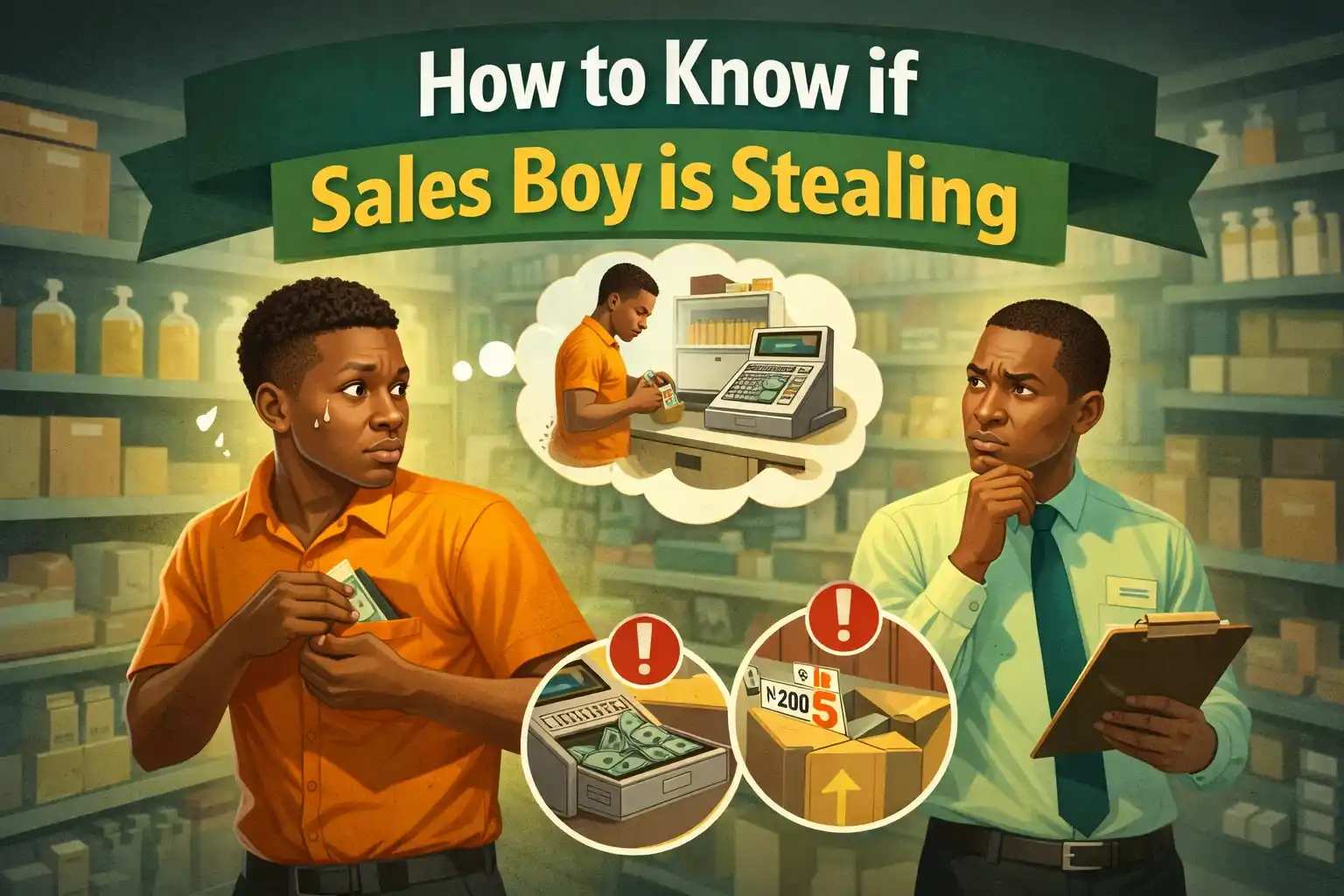
Staff Stealing Despite Good Pay? The Real Problem Isn't Values — It's Systems
Nigerian business owners who pay well still get stolen from. Here's why salary alone doesn't stop theft — and what actually does.

A Nigerian business owner posted something this week that resonated with a lot of people.
He'd just sacked another worker for stealing. His frustration was visible. He wasn't running a sweatshop — he was paying transport allowance, feeding allowance, supporting the worker's children's school fees, and paying a salary on top of all that. His question was genuine: what more do these people want?
The post got tens of thousands of views. The replies were full of people agreeing — "it's a values problem in Nigeria," "people are never satisfied," "some employees are just wicked."
I understand that frustration completely. I've watched business owners in this situation — including people close to me — and the betrayal is real. You give someone an opportunity, treat them well, and they steal from you anyway. It hurts.
But I think the "values problem" explanation, while emotionally satisfying, doesn't actually help you protect your business. And I want to offer a different way of thinking about it — one that does.
The Values Explanation and Why It's Incomplete
When we say theft is a values problem, we're saying the solution is to find better people. People with integrity. People who won't steal regardless of the opportunity.
Those people exist. But here's what the values explanation misses: opportunity is a more reliable predictor of theft than character.
Studies on workplace theft consistently show that most people who steal from employers are not career criminals. They're ordinary people who found themselves in a situation where theft was easy, unlikely to be detected, and the temptation was strong enough. Remove the opportunity — make theft difficult to execute and easy to detect — and the same people don't steal.
This isn't cynicism about human nature. It's how systems thinking works. Banks don't rely on hiring honest tellers and hoping for the best. They have cameras, dual controls, daily reconciliation, and audit trails — not because they think all tellers are thieves, but because the system makes theft nearly impossible for anyone, regardless of their values.
The business owner who paid transport, feeding, school fees, and salary — and still got stolen from — was doing the right thing on the human side. But if his records were in a notebook, if stock wasn't being counted regularly, if cash reconciliation wasn't happening daily — then he also created conditions where a person with shaky values could act on that weakness without much fear of being caught.
Good pay doesn't close that gap. Systems do.
What "A System" Actually Means for a Nigerian Business
I'm not talking about CCTV cameras and security guards, though those have their place. I'm talking about basic business controls that make theft visible quickly.
Every transaction recorded with a timestamp and a name. When your staff processes a sale, the system logs what was sold, how much was collected, and who recorded it. You can see this from your phone, from anywhere. Your worker knows this. That knowledge alone changes the calculation — theft is no longer easy and undetectable, it's logged and traceable.
Stock counted regularly and compared against records. If 50 units of a product left your shop this week but your sales records only show 35 sold, something happened to the other 15. Weekly stock counts, compared against your sales records, surface these gaps before they become enormous losses.
Prices set in the system, not in someone's head. One of the most common forms of theft in Nigerian businesses is the cut-price scheme — a worker sells at ₦4,000 when the price is ₦6,500, pockets the difference, and records the sale at the lower amount. When prices are fixed in your tracking system and every sale goes through it, this becomes impossible.
Daily cash reconciliation. Cash in hand at end of day should match what the records show was sold. Any gap needs an explanation. Not an accusation — just an explanation. Over time, patterns emerge. Honest gaps get resolved. Dishonest ones keep appearing until you address them.
None of this requires expensive technology or an accountant. It requires consistency — doing these things every day, not just when you suspect something is wrong.
The Uncomfortable Truth About "Loose" Businesses
Here's something I've noticed from talking to traders across Lagos and Southeast Nigeria:
The businesses that get stolen from most are almost always the ones with the loosest records.
Not because their staff are worse people. But because loose records create a specific kind of environment. When nobody is counting stock, when cash isn't reconciled, when sales aren't tracked in real time — the message workers receive, consciously or not, is: nobody is watching closely enough to notice.
That message doesn't corrupt good people. But it does give people who are already tempted a green light.
Tight records send a different message: this business knows its numbers, discrepancies get noticed, and I will be caught. Most people — even people who might have stolen in a looser environment — don't steal when they believe they will be caught.
This is why the same person can be honest in one job and dishonest in another. It's not that their values changed. It's that the systems were different.
What About the Workers Who Steal Despite the System?
They exist. And for them, a tight system is even more important — because it means you catch them fast, with evidence, before the loss becomes catastrophic.
The Owerri case I've written about before — a nwa boi selling plaster of paris bags at ₦5,000 when the price was ₦7,500, pocketing ₦2,500 per bag — ran to roughly 100 bags before it was discovered. ₦250,000 gone.
With weekly stock reconciliation and price controls in the system, that would have been caught after the first week. Maybe 10 bags. ₦25,000 is painful. ₦250,000 is devastating.
The system doesn't prevent every person from trying. It just ensures that when someone tries, they are caught quickly rather than slowly.
The Human Side Matters Too
I want to be careful here, because I don't want this to come across as purely transactional.
The business owner who pays transport, feeding, school fees, and salary is doing something right. That generosity matters — it builds genuine loyalty in most staff, and it reflects well on the kind of employer you are.
The point isn't to stop being generous. The point is that generosity and systems are not alternatives — they work together. You can be a good employer who also runs a tight operation. You can care about your workers' wellbeing and also reconcile your cash every evening.
In fact, the workers who are genuinely loyal — the ones who appreciate what you've done for them and would never steal — benefit from a good system too. When theft is caught quickly, honest workers are not under suspicion. When records are clear, false accusations don't happen. Good systems protect good workers as much as they catch bad ones.
The Question to Ask Yourself
If a worker in your business decided to steal tomorrow, how long before you would notice?
If the answer is "weeks" or "I'm not sure" — that's the gap to close. Not by hiring different people. By building a system where the answer is "a few days at most, because my stock is counted weekly and my cash is reconciled daily."
That's the business worth building. Not because all your workers are suspects — but because good businesses don't run on trust alone. They run on systems that make trust verifiable.
MyTreda was built to give Nigerian traders those systems — without needing an accountant, without expensive hardware, and without complicated software that takes months to learn. Every sale logged, every product tracked, every staff member's activity visible. All from your phone.
Ready to try MyTreda?
Join thousands of Nigerian traders managing their business better with MyTreda.
Get Started TodayWritten by
Tochukwu Nwosa
The founder of MyTreda Technologies Ltd. He grew up in an Igbo trading family, watched his brother lose money to an untracked apprentice in Onitsha Main Market, and built MyTreda so other Nigerian traders don't have to go through the same thing. He lives and works in Lagos.